FOR OUR FRAGILE VENICE:
Venice is a city that exists in a delicate balance.
For centuries, it has been celebrated as a cradle of beauty, art, and culture.
Home to internationally renowned events, galleries, and institutions,
it presents some of the world’s most refined artistic and cultural expressions to a global audience.
And yet, behind this grandeur, Venice faces significantly profound challenges.
Depopulation.
A lack of opportunities for young people.
A cultural and professional ecosystem that risks closing in on itself, becoming a bubble.
Venice cannot expand. It cannot build suburbs. It cannot transform into a contemporary metropolis of skyscrapers and new districts.
It's architecture does not allow it - and therein lies the source of its beauty.
Venice will forever remain a sanctuary of beauty.
But a city does not live on stone and memory alone.
It lives through its inhabitants.
Through cultural energy.
Through work.
Through those who choose it every single day.
The greatest risk is that Venice continues to survive solely on its past - the legacy of the Maritime Republic - without building a new contemporary identity of its own. Without daring to reshape its own future.
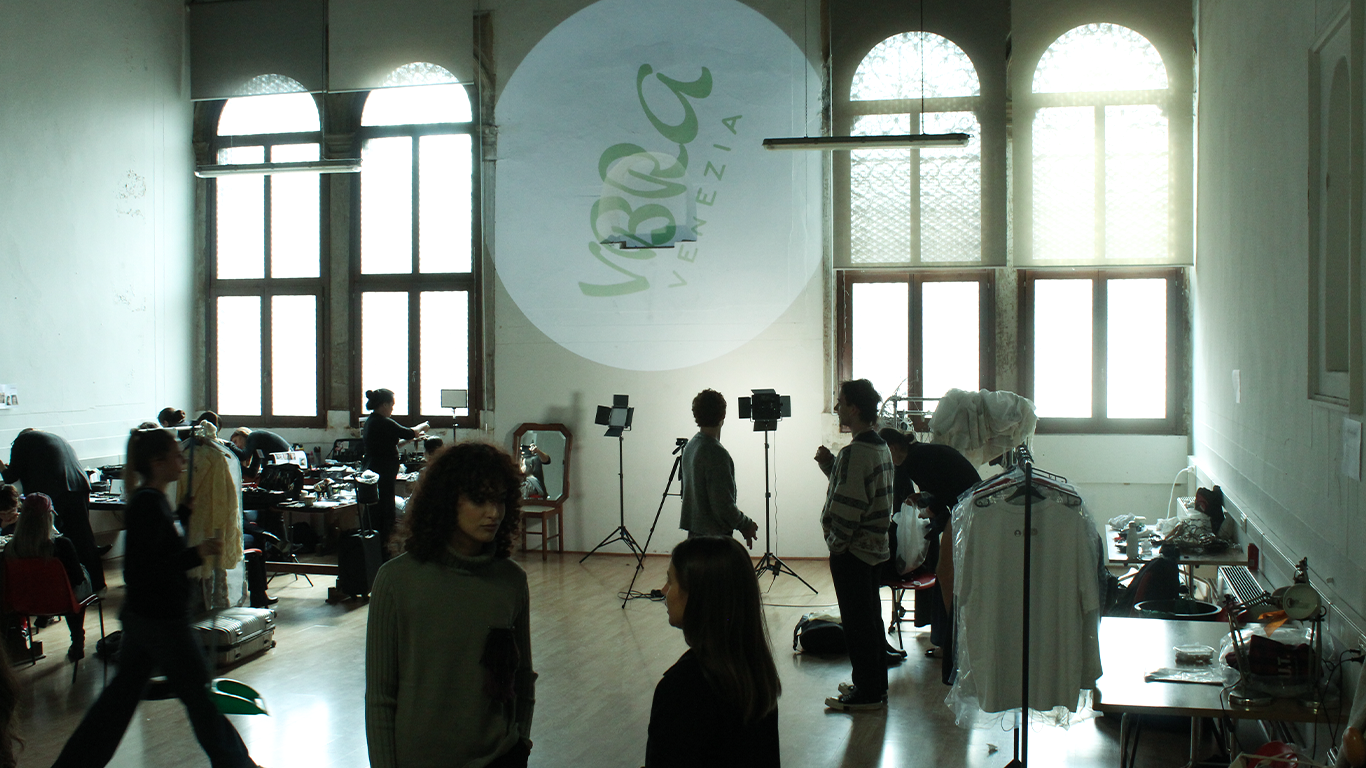
VBRA Venezia was created to support those who want to live Venice authentically, not exploit its image.
To counter a logic of selling and consuming the city with one of building and participating.
Venice needs tourism - it depends on it.
But tourism can be made conscious. It can be driven by culture rather than postcards, by contemporary artistic vitality, rather than iconic imagery.
While remembering and respecting its past, Venice must build its future.
A future made of young people who choose to stay.
Of creatives who arrive not to consume, but to contribute.
Of institutions that listen.
Of tourism that understands.
FOR CREATIVES WHO REMAIN
Venice, too, suffers from its own commercialization. The creative world shares the same struggle.
When did a product stop communicating? When did meaning lose its value? When did taste die?
It happens when the industry no longer makes space for, or recognizes, those who engage in research
when creatives are pushed to follow demand rather than shape it. When adaptation becomes total, and everything aligns with the context,
as Venice has aligned itself with the logic of tourism: surrendering to what is coming, rather than proposing something different, even contradictory.
The market asks for recognizability, speed, repetition. But creativity requires risk, time, and contradiction.
The result is a paradox: an industry that celebrates innovation, but structurally rewards conformity.
The challenge is not only economic - it is cultural.
If the future of fashion is to remain culturally relevant, it cannot rely solely on established names.
It must nurture what is fragile, radical, and experimental.
It must allow creative realities not just to survive, but to emerge without losing themselves.